
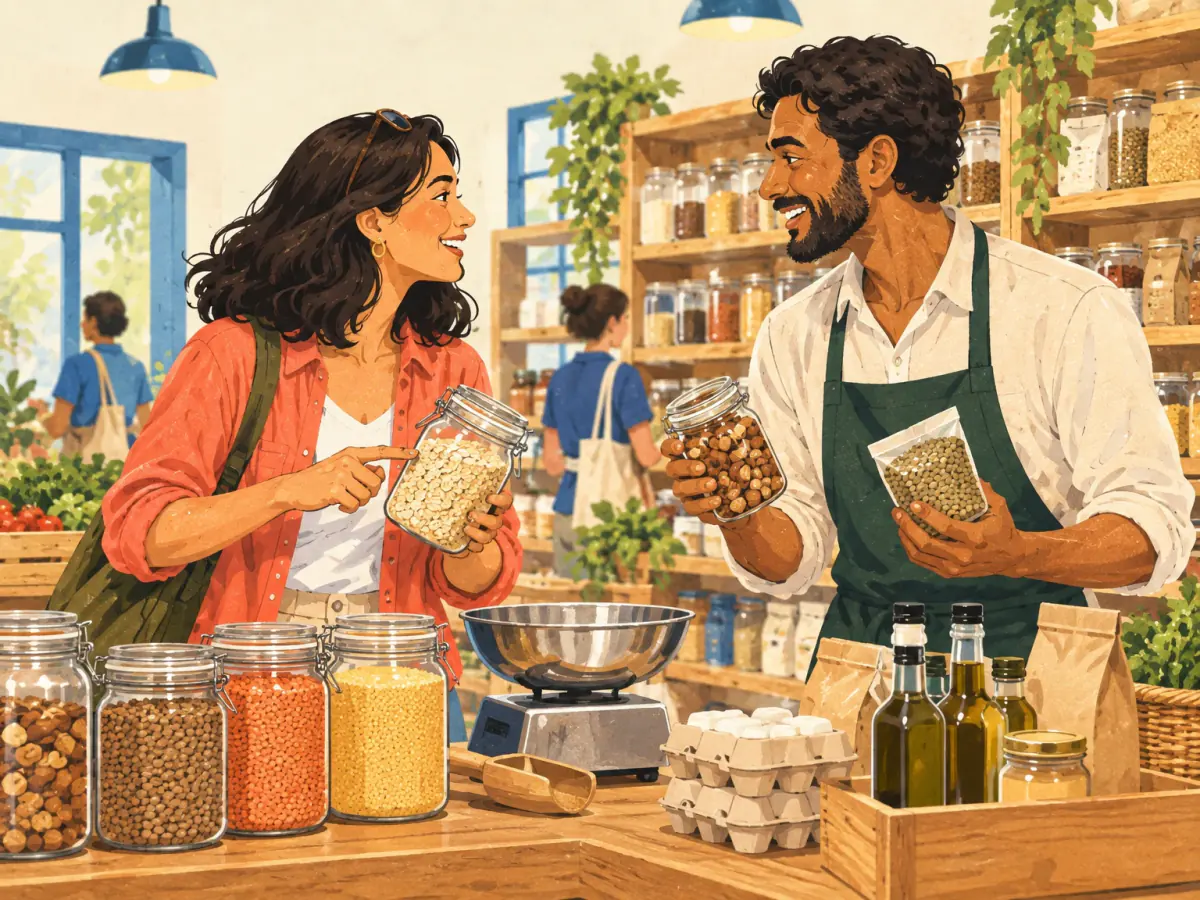
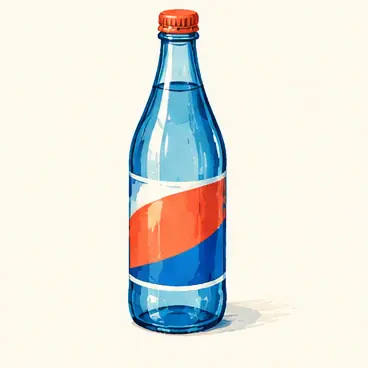
 a bottle
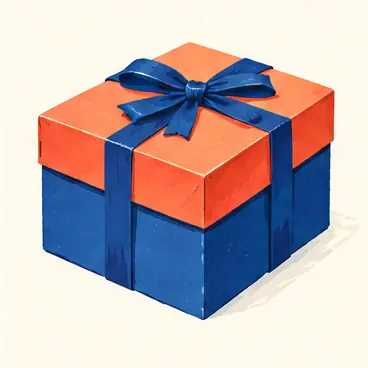 a box
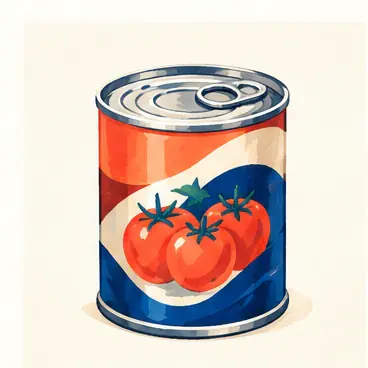 a can
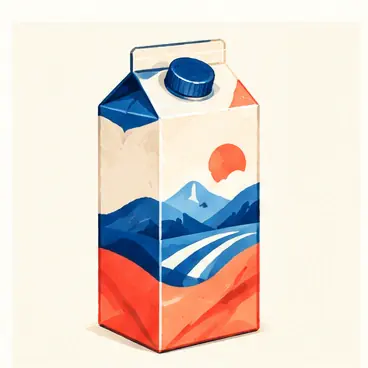 a carton
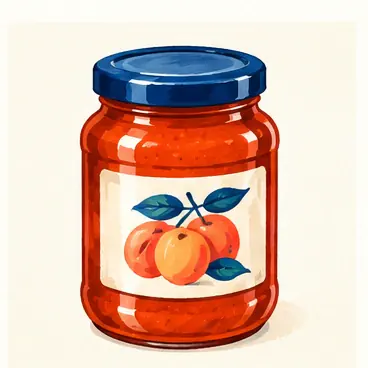 a jar
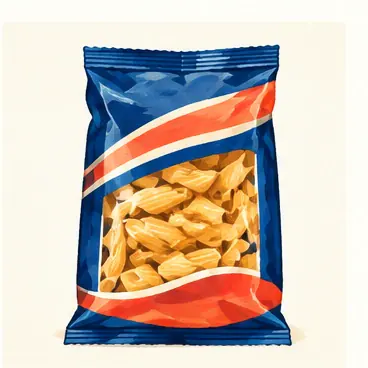 a packet
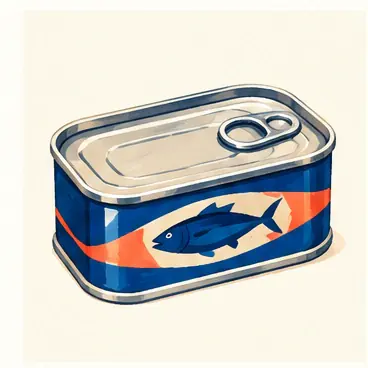 a tin
Food words for every meal
Learn food words by meal; you will use them every day.
- Breakfast: “toast”, “cereal”, “eggs”, “jam”, “tea”, “orange juice”
- Main meals: “chicken”, “salmon”, “pasta”, “rice”, “salad”, “potatoes”, “mushrooms”
- Fruit, desserts and snacks: “apples”, “strawberries”, “cake”, “nuts”, “biscuits”, “crisps”
- UK and US: British “crisps” are American “chips”, British “chips” are “French fries”, and “biscuits” are “cookies”.
Countable or uncountable: a, an, some and any
Countable things have a plural: “an apple”, “two apples”. Uncountable food has no plural and no “a”: “rice”, “bread”, “milk”, “cheese”, “water”.
- “We have an apple and some rice.” – “a” or “an” for one countable thing, “some” for an amount
- “There isn’t any milk.” “Are there any eggs?” – “any” in negatives and questions
- “I had some chicken.” – as food, “chicken”, “fish” and “fruit” are usually uncountable
How much or how many? A few, a little, a lot of, enough
Ask “how many” with plural nouns and “how much” with uncountable ones. The answers follow the same split.
- “How many eggs?” – “A few.” “How much rice?” – “A little.” – a small but useful amount
- “a lot of coffee”, “a lot of vegetables” – works with both; more natural than “much” in positive sentences
- “too much sugar”, “too many biscuits” – more than you want: a complaint
- “How many cartons do we need?” – “Only a few. We have enough milk.” – “enough” goes before the noun: as much as you need
Containers: a carton of milk, a jar of jam
A container makes uncountable food countable: container + “of” + food. The plural goes on the container: “two bottles of water”, “three cartons of milk”.
- “a bottle of water”, “a carton of milk”, “a box of cereal” – drinks and breakfast
- “a jar of jam”, “a packet of biscuits”, “a tin of tuna” – jars, packets and tins
- “a slice of bread”, “a piece of chicken”, “a cup of tea” – the amount you eat or drink
- UK and US: British English often says “tin” for food; Americans say “can”.
A short conversation: dinner for six
Two friends plan a dinner. Listen for “enough”, “any”, a container and “too many”, then plan a meal for your own guests.
Maya How many people are coming?
Owen Six. We have enough pasta, but there isn't any cheese.
Maya I can buy a packet of cheese and two bottles of water.
Owen Good. We have too many sweets, so don't buy dessert.
Maya All right. Fruit is healthier anyway.
Writing yesterday’s food diary
Go meal by meal in the past: “had” (have), “ate” (eat), “drank” (drink). Meals usually take no “a”: “I had breakfast at seven.” Give at least two real quantity details.
- “For breakfast I had toast and some fruit.” – breakfast
- “I had a sandwich for lunch.” – lunch
- “At dinner I ate a little rice, a lot of vegetables and two pieces of chicken.” – dinner, with three quantity details
- “Dinner was bigger than lunch.” “Fruit is healthier than sweets.” – optional comparison: “-er” for short adjectives, “more” for long ones (“more expensive”)
- “We need two cartons of milk.” / “Yesterday I drank a glass of milk.” – a plan is present, a diary is past
Common mistakes
Each of these is easy to fix:
- “a bread”, “two breads” → “some bread”, “two slices of bread” – bread is uncountable
- “How much apples?” → “How many apples?” – apples are countable
- “a few rice” → “a little rice” – rice is uncountable
- “I eated” → “I ate” – “eat” is irregular; so are “drink” and “have”: “drank”, “had”
- “two hundreds grams” → “two hundred grams” – no “-s” on “hundred”, “thousand” or “million” after a number
- Sounds: “bread” rhymes with “red”, “tea” with “see”, and “steak” with “make”.
A 10-minute daily practice routine
Say everything out loud, a little every day.
- 2 minutes: play the conversation and repeat each line.
- 3 minutes: open your fridge and say what is there: “There’s some milk, a few eggs and a jar of jam. There isn’t any cheese.”
- 3 minutes: write yesterday’s meals in three sentences with two quantity details.
- 2 minutes: write a shopping list with containers and read it aloud: “two bottles of water, a carton of milk, a bag of rice”
What comes next
Next, write a hotel room request with dates and one question, then short notes for visitors with adverbs like “quietly” and “usually”.