

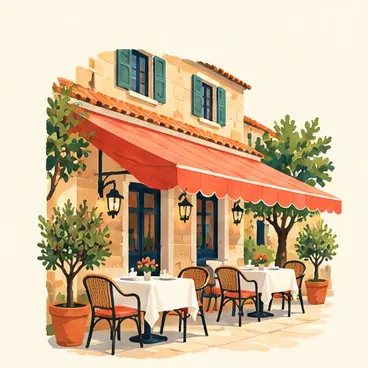
 a restaurant
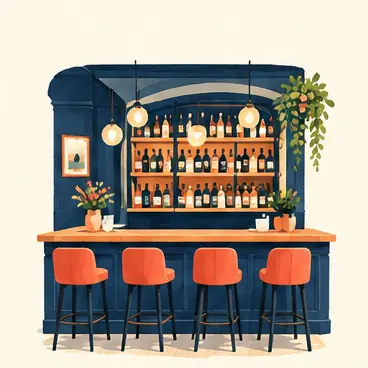 a bar
 a gift shop
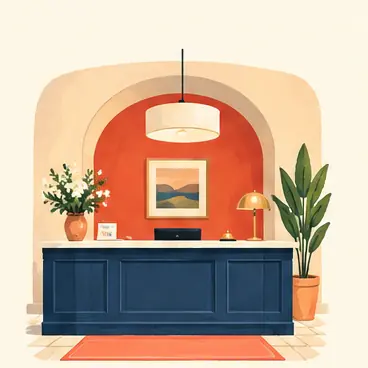 reception

Was and were: the past of am, is and are
Be has only two past forms: was with I, he, she, it and one thing; were with you, we, they and more than one thing. You always takes were, even for one person.
- I am → I was: “I was at reception.”
- he / she / it is → was: “It was on the table.”
- you / we / they are → were: “We were in London.”
- One thing or more: “My key was in my bag.” “My keys were in my bag.”
Questions, negatives and short answers
For a question, put was or were before the person or thing. For a negative, say wasn’t or weren’t. Short answers repeat was or were.
- “Where was the key last night?” “Where were you at six?”
- “Was your bag in the room?” – “No, it wasn’t. It was at reception.”
- “Were you on the train?” – “Yes, I was.”
- “We weren’t at the hotel yesterday.”
In, on, under and at: where it was
The cards above play in, on and under and some hotel places. With two places, give the small one first: “on the table in the bar”.
- in = inside: “The towels were in the cupboard.”
- on = on a surface: “My phone was on the floor.”
- under = below: “The remote control was under the pillow.”
- at = a point or a service: “It was at reception.” “I was at home.”
Place words for a hotel and for your day
These places come up most when something goes missing.
- Hotel: reception, a restaurant, a bar, a gift shop, a gym, a swimming pool, the lift, the car park
- Room: a bed, a pillow, a table, a cupboard, the bathroom
- Your day: at home, at work, at university, in bed, in the kitchen
- Travel: on a bus, on a train, on a plane, but in a car or a taxi
- No the in “at home”, “at work” and “in bed”: “I was in bed at ten.”
Then and now: from was to is
Last night, yesterday and at six go with was and were; now goes with is and are. The next question often uses -ing for what is happening at this moment.
- Then: “It was on the table last night.”
- Now: “It isn’t there now.” “Where is it now?”
- “Who’s sitting there now?” – “A guest in a blue jacket.”
- What is there now: “There’s a guest at the table.” “There aren’t any keys at reception.”
- Next step: “Let’s ask him.”
A missing key at a hotel
Two people at a hotel look for a guest’s key. Listen for isn’t (now), was (last night) and “Who’s” (who is). Then replay it with your phone instead of the key.
Owen The guest's key isn't at reception now.
Maya Where was it last night?
Owen It was on the table in the bar.
Maya Who's sitting there now?
Owen A guest in a blue jacket.
Maya Let's ask him.
Common mistakes
Each of these has an easy fix:
- “You was at home.” You always takes were: “You were at home.”
- “Where you were?” Put were before you: “Where were you?”
- “Did you were at work?” Was and were never take did: “Were you at work?”
- “The keys was at reception.” More than one thing takes were: “The keys were at reception.”
- “I was in home.” Say “at home”, just like “at work”.
A 10-minute daily practice routine
Say everything out loud, a little every day.
- 2 minutes: play the conversation, pause after each line and repeat it.
- 2 minutes: say where you were at three times yesterday: “At eight I was at home. At ten I was on a bus.”
- 3 minutes: photograph your keys and phone, move them, then compare: “My phone was on the table. Now it’s under the pillow.”
- 3 minutes: ask someone “Where were you last night?” and two more questions with were.
What comes next
Next, use other verbs in the past. Many add -ed: “I stayed in a small hotel.” “We arrived at six.” Their questions use did (“Did you arrive at six?”), but was and were never do. Then tell a short story about your day.