Przejdź do treści
Flalingo

Ćwiczenia z angielskiego

Just, already i yet po angielsku dla dzieci (A2, 9–12 lat): present perfect, czyli “Czy przedstawienie jest gotowe?”

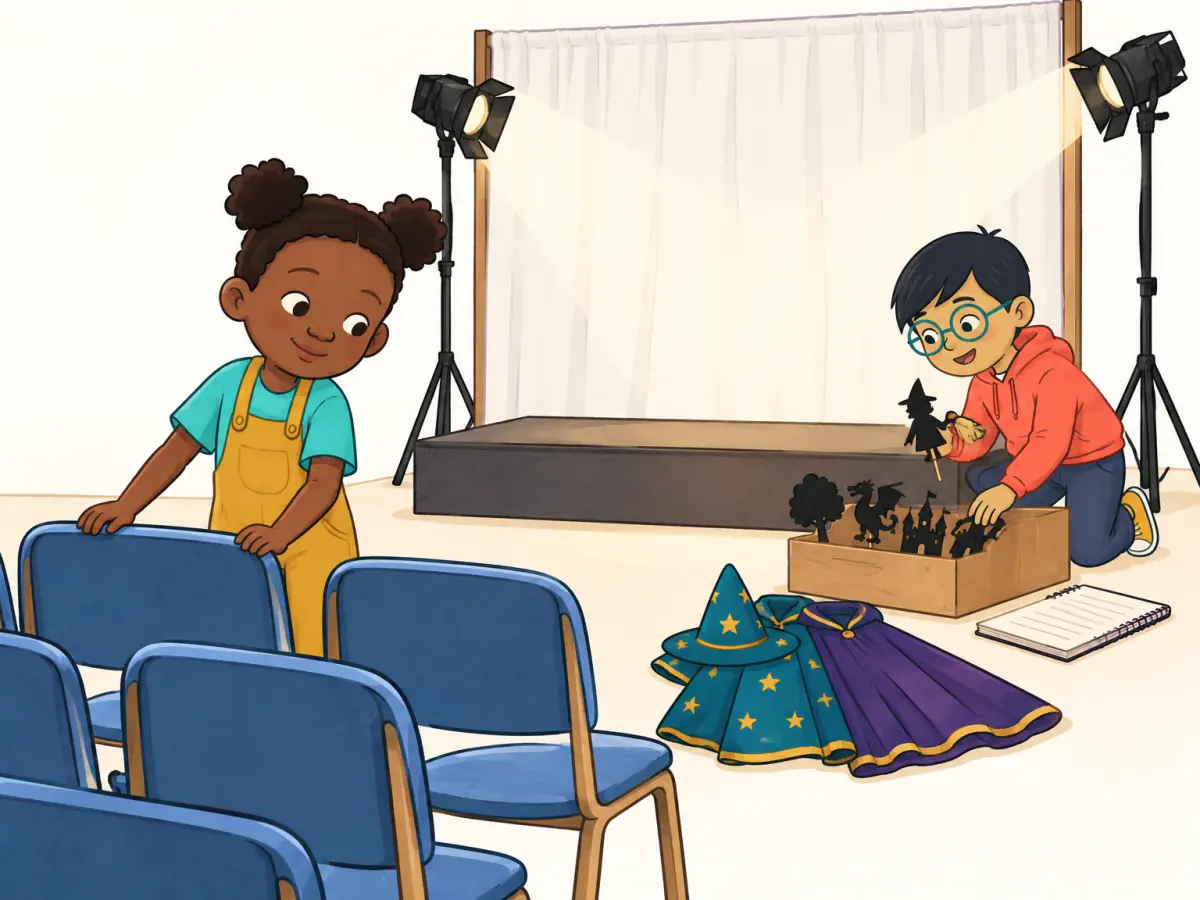
In a school shadow-theatre workshop, lights shine toward a white curtain. A script, two costumes and character cut-outs rest beside the empty stage while a child checks the audience seats.

Pomóż dziecku w wieku 9–12 lat używać just, already i yet po angielsku (A2) przy przygotowaniach do przedstawienia i odróżniać “We have just tested the lights.” od “I finished it yesterday.”

Gdy mówimy, co jest gotowe, a czego jeszcze brakuje, angielski używa czasu present perfect: have albo has plus imiesłów przeszły (past participle). “Just” znaczy przed chwilą (“We have just tested the lights.”), “already” znaczy już zrobione, często wcześniej, niż ktoś się spodziewał, a “yet” stoi na końcu pytań i przeczeń o czymś, na co wciąż czekamy (“Have you finished the script yet?”). Gdy mówisz, kiedy coś się stało, przechodzisz na past simple: “I finished it yesterday.” Ten temat na poziomie A2 jest dla dzieci w wieku około 9–12 lat, które już używają past simple.

Dla kogo jest ten artykuł?

  • Rodzice dzieci, które już używają past simple: dziecko mówi “I finished my homework yesterday.” i zna kilka czasowników nieregularnych.
  • Rodziny dzieci, które lubią teatr, szkolne przedstawienia albo kukiełki: sprawdzanie, co jest gotowe przed występem, daje nowej gramatyce prawdziwe zadanie.
  • Rodzice, którzy chcą ćwiczyć w domu: pakowanie plecaka do szkoły albo przygotowania do przyjęcia sprawdzą się tak samo jak scena.
  • Za wcześnie: jeśli dziecko wciąż mówi “Yesterday I go to the concert.”, najpierw poćwiczcie past simple, na przykład z relacją z koncertu (link poniżej).
  • Za łatwe: jeśli dziecko bez pomocy mówi “I haven’t packed yet, but I’ve already found my ticket.”, przejdź do części “Co dalej” na końcu.

Otwórz przykładowe strony

Otwórz przykładowe strony

Karty ze słowami

lightslights
make-upmake-up
scriptscript
curtaincurtain
character

a person or creature in a story or play

stagestage
costumecostume
audience

the people watching or listening to a performance

Have you finished the script yet?

Study how this model connects form with meaning.

Yes. I finished it yesterday, and I have already checked the ending.

Study how this model connects form with meaning.

We have just tested the lights.

Study how this model connects form with meaning.

I have never performed this part before.

Study how this model connects form with meaning.

Rozmowa

Leo Have you finished the script yet?

Nia Yes. First I finished it yesterday. Then I checked the ending, and we have just tested the lights.

Nia Have you found the costume?

Leo No, I have not found it yet.

Leo What have we just tested?

Nia We have just tested the lights.

Konstrukcja zdania

Have you finished the script yet?

Yes. I finished it yesterday, and I have already checked the ending.

  • We have just tested the lights.
  • I have never performed this part before.

Więcej ćwiczeń

Use the contrast

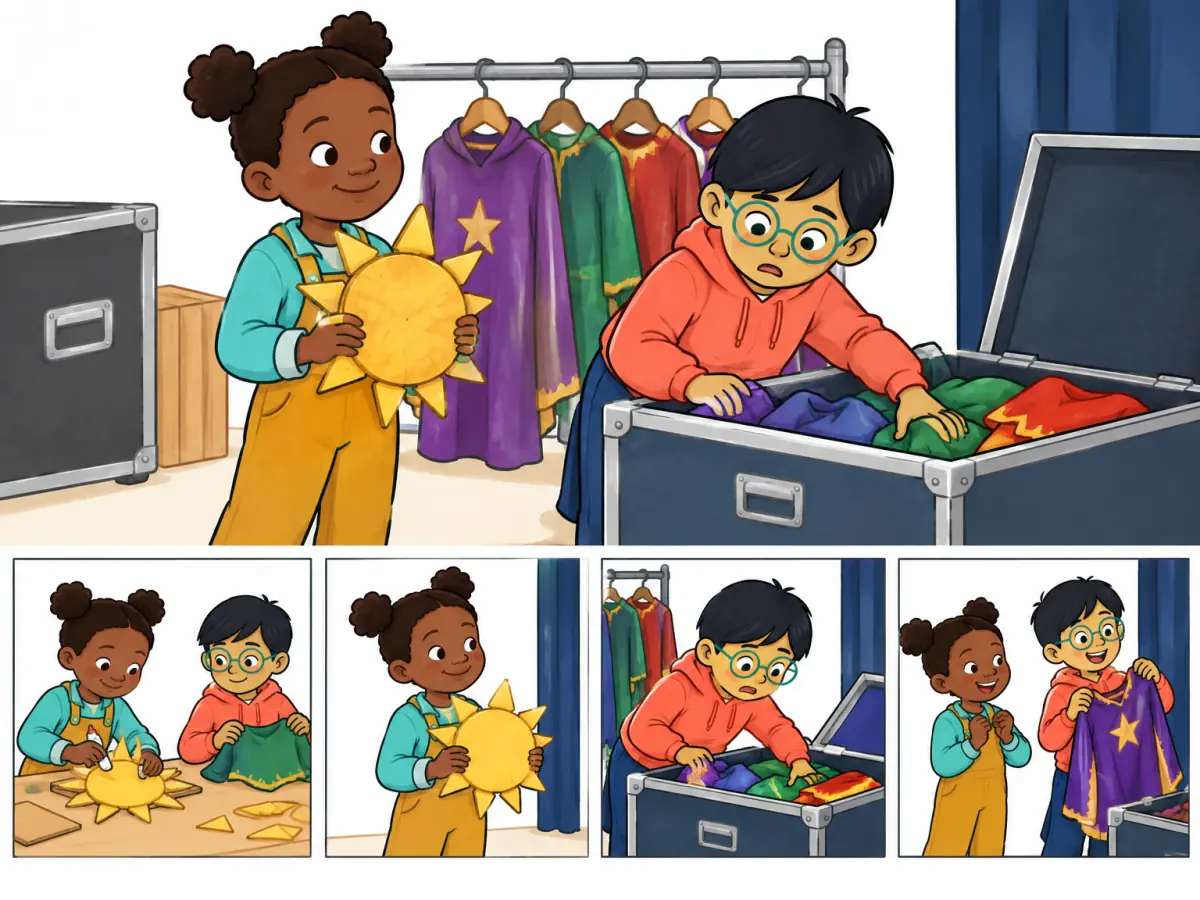
Backstage after rehearsal, Nia holds a completed prop, Leo searches for one missing costume, and a four-panel event strip shows actions before and after the current moment.

Leo Have you finished the script yet?

Nia Yes. I finished it yesterday, and I have already checked the ending.

Nia Have you found the costume?

Leo No, I have not found it yet.

Leo What have we just tested?

Nia We have just tested the lights.

Have you finished the script yet?

Yes. I finished it yesterday, and I have already checked the ending.

  • We have just tested the lights.
  • I have never performed this part before.

The moon behind the curtain

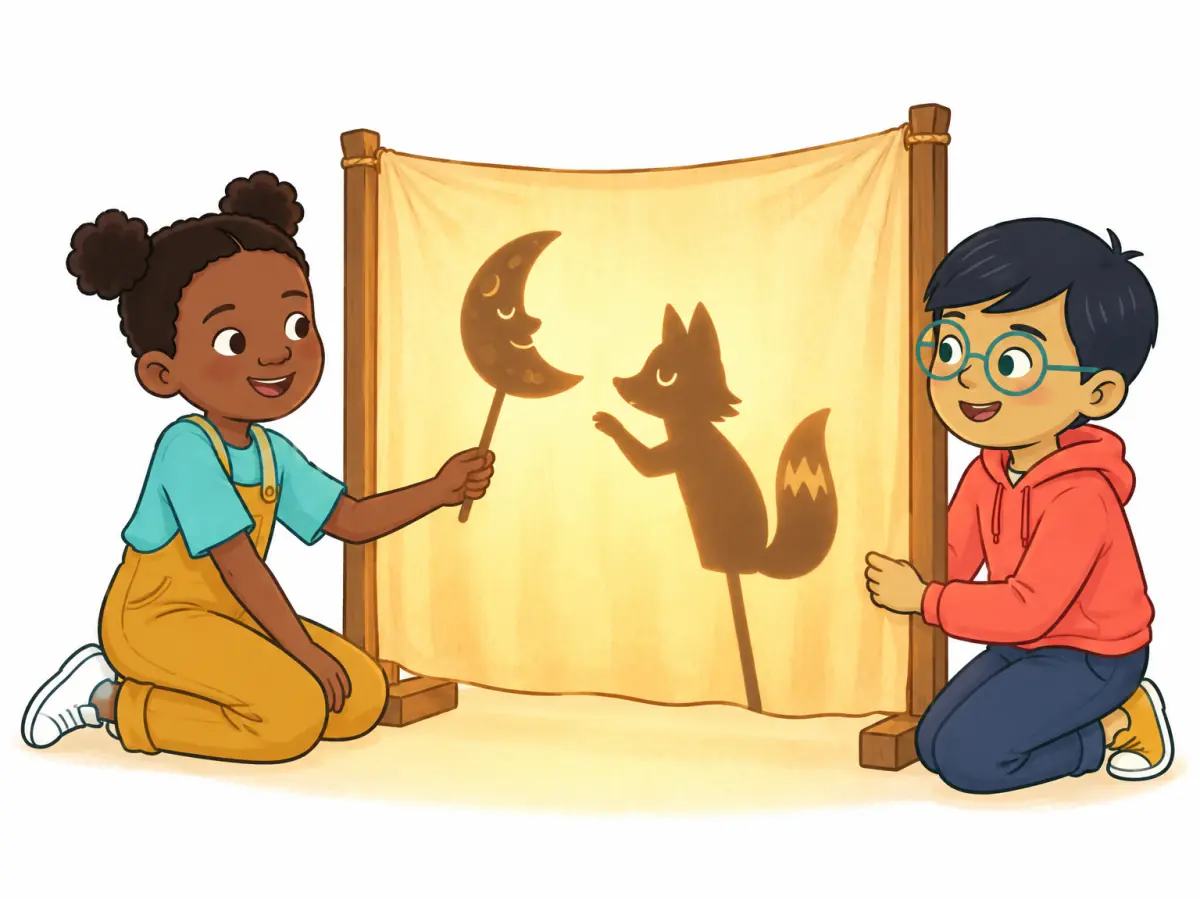
The end of the shadow play: behind a glowing curtain, Nia holds up the moon puppet that has been found, and the fox puppet reaches towards it while Leo holds the curtain.

THE MOON BEHIND THE CURTAIN

NARRATOR: The moon puppet has disappeared before the show.

FOX: I have already looked beside the lights.

CHILD: I checked the costume box ten minutes ago.

FOX: Listen! Something has just moved behind the curtain.

CHILD: It is the moon. The string caught on a nail.

NARRATOR: They free the puppet, and the audience sees a bright ending.

Plan aloud

The end of the shadow play: behind a glowing curtain, Nia holds up the moon puppet that has been found, and the fox puppet reaches towards it while Leo holds the curtain.

Nia How will your new scene end?

Leo The fox finds the moon puppet behind the curtain, and the light returns.

Leo Where will you put the stage directions?

Nia I will put them in brackets.

How will your new scene end?

CHARACTERS: Fox, Child, Narrator SCENE: Behind the theatre curtain. (Child lifts a silver string.) FOX: I have just found the moon puppet. CHILD: The audience is waiting! NARRATOR: The light returns and the scene ends.

  • character list
  • scene heading
  • stage direction in brackets
  • clear ending

Draft and revise

The end of the shadow play: behind a glowing curtain, Nia holds up the moon puppet that has been found, and the fox puppet reaches towards it while Leo holds the curtain.

Nia Who will read your text?

Leo My teacher and I will act it out.

Leo What will you check?

Nia I will check my spelling and punctuation.

How will your new scene end?

CHARACTERS: Fox, Child, Narrator SCENE: Behind the theatre curtain. (Child lifts a silver string.) FOX: I have just found the moon puppet. CHILD: The audience is waiting! NARRATOR: The light returns and the scene ends.

  • character list
  • scene heading
  • stage direction in brackets
  • clear ending
Poznaj ten rozdział
Jak chcesz się uczyć?

Słowa do przygotowań przed przedstawieniem

Przygotowania do przedstawienia to naturalne miejsce na tę gramatykę, bo wszyscy ciągle sprawdzają, co już jest zrobione. Dwa słowa zwykle trzeba wyjaśnić: “character” to osoba albo stworzenie w opowiadaniu lub sztuce (postać), a “audience” to ludzie, którzy oglądają (publiczność). Jedna pułapka w pisowni: gh w “lights” się nie wymawia, tak jak w “night”.

  • stage – scena, na której występują aktorzy
  • curtain – kurtyna przed sceną
  • script – scenariusz, czyli tekst sztuki
  • costume, make-up – kostium i makijaż

Present perfect: have lub has + imiesłów

Present perfect łączy przeszłą czynność z teraźniejszością: “We have tested the lights.” znaczy, że test się skończył i światła są teraz gotowe. Czasowniki regularne dostają -ed: finished, tested. Nieregularne mają własną formę, nie zawsze taką samą jak w past simple: write, wrote, written.

W pytaniu have albo has stoi przed podmiotem: “Have you found the costume?” W mowie przeczenia są zwykle skrócone: “I haven’t found it.”

  • I, you, we, they: “We have tested the lights.”
  • he, she, it: “She has found the costume.”

Just, already, yet i never

“Just” i “already” stoją między have a imiesłowem. “Just” znaczy przed chwilą, jak polskie “właśnie”: “We have just tested the lights.” “Already” znaczy już zrobione, często wcześniej, niż ktoś się spodziewał: “I have already checked the ending.”

“Yet” występuje w pytaniach i przeczeniach i stoi na samym końcu: “No, I have not found it yet.” Po polsku “już” pasuje i do “already”, i do pytania z “yet” (“Już skończyłeś?” to zwykle “Have you finished yet?”), a “jeszcze nie” to “not yet”. Dlatego warto ćwiczyć te dwa słowa osobno. Krótka odpowiedź “Not yet.” brzmi bardzo naturalnie. “Never” znaczy nigdy dotąd: “I have never performed this part before.”

Nia Have you found the costume?

Leo No, I have not found it yet.

Leo What have we just tested?

Nia We have just tested the lights.

Present perfect czy past simple?

To najważniejszy wybór w tym temacie. Jeśli mówisz albo pytasz, kiedy coś się stało (yesterday, ten minutes ago, last year), użyj past simple; pytania z “When…?” też. Jeśli czas nie jest podany, a liczy się wynik teraz, użyj present perfect. Po polsku “skończyłem” oznacza i “I finished”, i “I have finished”, więc to rozróżnienie jest dla polskich dzieci nowe. Wskazówka: jeśli w zdaniu jest zakończony czas, wybierz past simple.

Prawdziwe odpowiedzi mieszają oba czasy. Poniżej odpowiedź opisuje zakończone kroki w past simple, a najnowszą wiadomość podaje z “have just”.

  • “I have checked the costume box.”: czas nie jest podany
  • “I checked it ten minutes ago.”: zakończony czas

Leo Have you finished the script yet?

Nia Yes. First I finished it yesterday. Then I checked the ending, and we have just tested the lights.

Poznaj ten rozdział po swojemu

Piszemy krótką scenę

Ten sam język pasuje do krótkiej sztuki o czymś, co znika tuż przed występem. Wypisz postacie, nazwij scenę, a potem pisz imię każdej mówiącej postaci z dwukropkiem. Didaskalia, czyli wskazówki dla aktorów, zapisuje się w nawiasach i w czasie teraźniejszym. Model, który dziecko może zmienić:

“CHARACTERS: Fox, Child, Narrator. SCENE: Behind the theatre curtain. (Child lifts a silver string.) FOX: I have just found the moon puppet. CHILD: The audience is waiting! NARRATOR: The light returns and the scene ends.”

  • Zaplanuj: czego brakuje, gdzie szukają, gdzie to jest
  • Sprawdź: jedno “just”, jedno “already” albo “yet” i jasne zakończenie, a potem zagrajcie scenę razem

Częste błędy i proste poprawki

Na poziomie A2 to normalne. Powtórz zdanie poprawnie i grajcie dalej.

  • “I have finished it yesterday.”: z zakończonym czasem używamy past simple: “I finished it yesterday.”
  • “I have already finish.”: potrzebny jest imiesłów: “I have already finished.”
  • “Have you yet finished?”: “yet” stoi na końcu: “Have you finished yet?”
  • “I have found it yet.”: w zdaniach twierdzących używamy “already”: “I have already found it.”

Zabawa w domu: lista kontrolna zza kulis

Przed prawdziwym wydarzeniem, na przykład wycieczką szkolną, zapisz na liście sześć zadań. Zapytaj: “Have you packed your water bottle yet?” Dziecko odpowiada “Yes, I have already packed it.”, “Not yet.” albo “I have just done it!” Potem zamieńcie się rolami. W drugiej rundzie zapytaj “When did you do it?”, żeby dziecko przeszło na past simple. W większej wersji zróbcie teatr cieni z latarką i prześcieradłem.

Co dalej

Potem dziecko może opisywać problemy i rozwiązania z too i enough: “The costume is too big.” “The string is not long enough.” To prowadzi do krótkiego opowiadania o kostiumie, z którym coś poszło nie tak.

Najczęstsze pytania

Czym różnią się just, already i yet?

“Just” znaczy przed chwilą, “already” już zrobione, często wcześniej, niż się spodziewano, a “yet” pyta albo mówi, czy coś oczekiwanego już się wydarzyło: “Have you finished yet?”

Czy można powiedzieć “I have finished it yesterday”?

Nie. Z zakończonym czasem, takim jak yesterday albo last week, używamy past simple: “I finished it yesterday.” Bez niego używamy present perfect: “I have finished it.”

Czy “I just finished it” to błąd?

Nie. W amerykańskim angielskim past simple z just, already i yet jest częsty: “Did you finish it yet?” Brytyjski angielski zwykle woli present perfect. Obie formy są poprawne.

Poznaj ten rozdział
Jak chcesz się uczyć?

Co dalej?

Nauka z lektorem na żywo

Na lekcjach Flalingo dla dzieci Twoje dziecko ćwiczy takie rozdziały jeden na jeden z lektorem na żywo, grając na wspólnym ekranie.

Umów bezpłatną lekcję próbną