
Przejdź do treści
Flalingo

Ćwiczenia z angielskiego

Jak opisać zdjęcie po angielsku i spekulować o nim (B2): looks as if, might have i must have

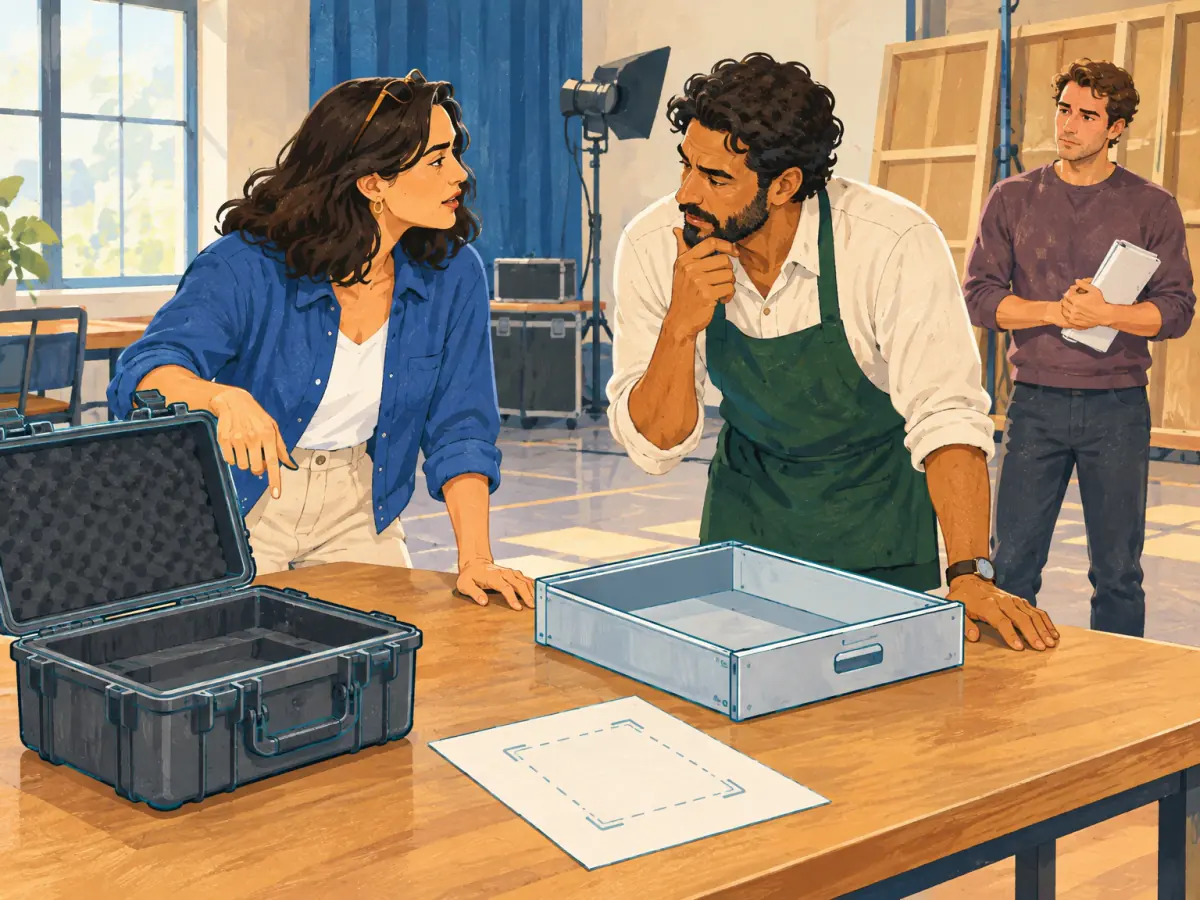
Two friends look at an empty instrument case and its tray on a rehearsal-room table.

Przewodnik B2: jak opisać zdjęcie po angielsku dzięki wyrażeniom miejsca, słownictwu mowy ciała, look i seem oraz czasownikom modalnym, takim jak might have i must have, żeby każdy domysł był oznaczony i oparty na czymś widocznym.

Opisując zdjęcie po angielsku, najpierw przekaż to, co widać, a dopiero potem interpretuj. Prowadź czytelnika od pierwszego planu do tła, a każdy domysł oznacz wyrażeniem, takim jak may, looks as if albo must have, i połącz go z widocznym szczegółem. “His raised eyebrows suggest that the damage is unexpected.” to uczciwe zdanie; “He is shocked.” to domysł podany jako fakt. To temat na poziomie B2 (wyższym średnio zaawansowanym) dla dorosłych, którzy potrafią powiedzieć, co jest na obrazku, i chcą ostrożnie spekulować.

Dla kogo jest ten artykuł?

  • Dorośli na poziomie wyższym średnio zaawansowanym, którzy potrafią wymienić, co jest na obrazku, ale przedstawiają domysły jako fakty.
  • Osoby, które opisują obrazy po angielsku: zadanie ustne ze zdjęciami, raport z incydentu, ocena projektu albo występu, tekst na wystawę.
  • Uczący się, którzy chcą brzmieć uczciwie: ostrożnie z may i looks as if, pewnie z must have tylko przy mocnych dowodach.
  • Za wcześnie: jeśli nazywanie miejsc, osób i czynności na zdjęciu jest jeszcze nowe, zacznij od opisu zdjęcia na poziomie B1, który wyjaśnia, dlaczego zdjęcie jest dla ciebie ważne.
  • Za łatwo: jeśli już bez zastanowienia oddzielasz dowody od interpretacji, przejdź do recenzji dzieła sztuki na poziomie C1, która każdą opinię opiera na obserwowalnych dowodach.

Otwórz przykładowe strony

Otwórz przykładowe strony

Karty ze słowami

in the foreground/centre/background

locate elements by depth

In the foreground, Maya stands by the open door.

on the left/right; in front of; behind; opposite; outside

locate one element relative to another

Owen is opposite the window, behind the case.

may/might/perhaps

mark a possible interpretation

The case might have been moved.

looks/seems as if/as though

connect visible evidence to a clause

It looks as though rain entered overnight.

The photo reminds me of…

connect the image to a relevant memory or genre

The photo reminds me of an unresolved workplace incident.

Rozmowa

maya Her folded arms look defensive at first.

owen Yes, but the raised shoulder later looks as if it is protecting her.

maya The metal sound seems important, although we never see its source.

owen And the door feels like stone, but it is a painted prop.

Konstrukcja zdania

look/feel/smell/sound/taste + adjective

describe a quality

The fabric feels rough and the alarm sounds urgent.

sense verb + like + noun phrase

compare with a thing

The prop feels like real stone.

sense verb + as if/as though + clause

give an apparent situation

It sounds as if somebody is behind the curtain.

look

impression specifically from appearance

Maya looks tired under the stage light.

seem

general impression from any evidence

Owen seems worried after reading the schedule.

feel like + noun/-ing

want something or want to do something

I feel like watching the second performance.

as: role/reason/time/example/comparison

marks function, cause, simultaneous time, example, or comparison

As the actor left, Maya worked as a reviewer and noted details such as gesture and pace.

Więcej ćwiczeń

A rehearsal-room decision

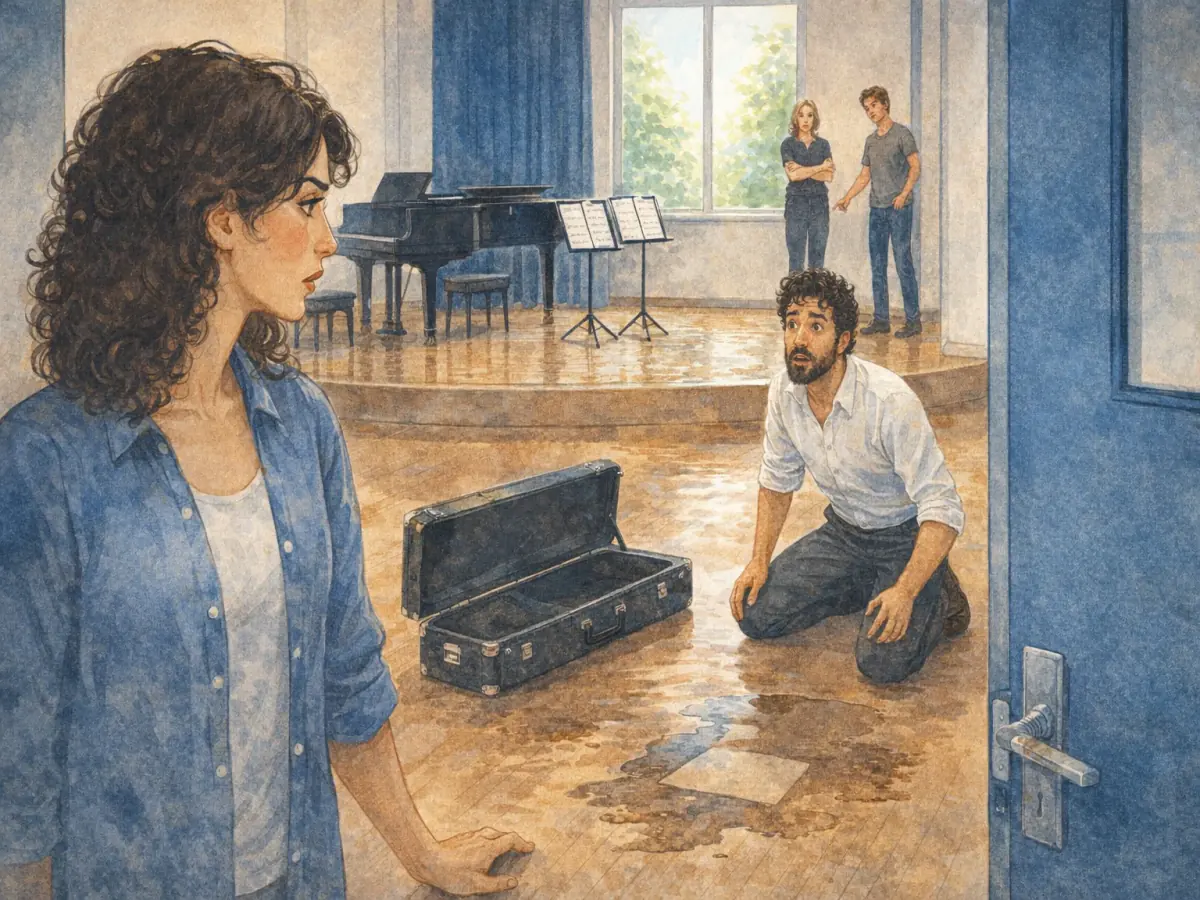
Maya just inside the open door, Owen kneeling by a damaged case, and two performers near a wet patch below the window.

In the foreground of the photograph, Maya is standing just inside an open rehearsal-room door. Her face and shoulders look tense. In the centre, Owen is kneeling next to a damaged instrument case. He looks worried, and his raised eyebrows suggest that the damage is unexpected.

In the background, two performers are waiting near the stage. One has folded her arms; the other is pointing towards a wet patch below the window. It looks as if rain has entered during the night. The case may have been moved away from the wall, because its original position is marked by a dry rectangle.

The photo reminds me of the moment before a practical decision. Nobody is posing, and each gesture contributes evidence without proving exactly what happened.

Body and gestures 1

ankle

joint connecting foot and lower leg

Maya rotated her ankle.

calf

muscular back of the lower leg

Owen stretched his calf.

heel

back part of the foot

The shoe rubbed her heel.

knee

joint between thigh and lower leg

He knelt on one knee.

elbow

joint in the middle of the arm

Maya rested an elbow on the table.

fist

closed hand

Owen relaxed his fist.

nails

hard coverings at the ends of fingers or toes

The actor bit her nails.

palm

inner surface of the hand

She placed her palm on the door.

Body and gestures 3

kidneys

two organs that filter blood and make urine

The scan showed both kidneys.

liver

large organ that processes substances in the blood

The liver metabolizes many medicines.

lungs

two organs used for breathing

The singer filled her lungs.

forehead

area above the eyebrows

Sweat appeared on Owen’s forehead.

cheek

side of the face below the eye

Stage paint covered one cheek.

lips

soft edges of the mouth

Maya pressed her lips together.

neck

part joining head to torso

The collar covered his neck.

chin

lower front part of the face

Owen raised his chin.

Write a complete photo description

Evidence audit

Poznaj ten rozdział
Jak chcesz się uczyć?
Masz już konto?

Darmowe konto otwiera na stałe jeden rozdział.

Plan opisu zdjęcia w czterech częściach (140–190 słów)

Wyobraź sobie salę prób: kobieta w drzwiach i mężczyzna klęczący przy uszkodzonym futerale. Użyj czterech wyrażeń miejsca i sześciu słów związanych z mową ciała:

  • Ogólny opis: “The photo shows a rehearsal room with four people and a damaged case.”
  • Szczegóły przestrzeni: “In the centre, a man is kneeling next to the case.”
  • Ostrożny wniosek oparty na dowodzie: “The case may have been moved: a dry rectangle marks where it stood.”
  • Osobista reakcja: “The photo reminds me of the moment before a practical decision.”

Wyrażenia miejsca, które prowadzą wzrok

Poruszaj się w jednym kierunku: od przodu do tyłu albo od lewej do prawej. Polskie “na pierwszym planie” to in the foreground, a nie on the foreground, ale już “po lewej” to on the left.

  • Głębia i strony: in the foreground, in the centre, in the background, on the left, on the right. “In the foreground, a woman is standing in the doorway.”
  • Relacje: in front of (bliżej patrzącego), behind, next to, opposite (naprzeciwko, po drugiej stronie; bez of). “The man is opposite the window, behind the case.”

Mowa ciała: nazywaj precyzyjnie, odczytuj ostrożnie

Do czynności używaj present continuous, a do pozycji imiesłowu: “She is pointing at the window.” “Her arms are folded.”

Gest jest dowodem, a nie hasłem w słowniku: skrzyżowane ręce mogą oznaczać postawę obronną, zimno albo zwykłą wygodę. Zanim zaczniesz pisać, przedyskutuj: “Should interviewers judge candidates by their body language?” “Why do we feel so sure about other people’s feelings when the evidence is weak?”

  • Postawa i dłonie: folded arms (skrzyżowane ręce), a raised shoulder, a clenched fist (zaciśnięta pięść), a hand on the hip.
  • Twarz: raised eyebrows (uniesione brwi), a frown, a furrowed brow (zmarszczone czoło), pressed lips.
  • Czynności: kneeling, pointing, shrugging, staring, leaning against a wall.

Look, seem, look like czy look as if?

Czasowniki zmysłów wyrażają wrażenie, a nie pewność, i łączą się z przymiotnikiem, a nie z przysłówkiem. Polskie “wygląda” ma trzy konstrukcje: “wygląda na zmęczoną”, “wygląda jak kamień” i “wygląda na to, że padało”. Po angielsku odpowiadają im look tired, look like stone i look as if it has rained. Tu późniejszy szczegół zmienia odczytanie niemej sceny:

  • Look, feel albo sound + przymiotnik: “Her shoulders look tense.”
  • Look albo feel + like + rzeczownik: “The prop feels like real stone.”
  • Look albo sound + as if lub as though + zdanie: “It looks as if rain has come in overnight.”
  • Seem przy wrażeniu opartym na dowolnych przesłankach: “He seems worried after reading the schedule.”

Maya Her folded arms look defensive at first.

Owen Yes, but the raised shoulder later looks as if it is protecting her.

Owen And the door feels like stone, but it is a painted prop.

Na ile masz pewność? Czasowniki modalne do wnioskowania

Po polsku czas przeszły niesie sam czasownik modalny: “musiał zapomnieć”. Po angielsku must się nie zmienia, a przeszłość wyraża have + past participle: “He must have forgotten.” Dobieraj czasownik do siły dowodów. O teraźniejszości mów: modal + be; o tym, co stało się przed zrobieniem zdjęcia: modal + have + past participle:

  • Prawie pewne, must: “They must have arrived a while ago: their coats are hanging up.”
  • Możliwe, may, might albo could: “She may be waiting for someone.”
  • Prawie na pewno nie, can’t albo couldn’t: “The door can’t be real stone: one actor is carrying it with one hand.”
  • Must have to wniosek, a should have to krytyka: “She must have called; she should have called me too.”
Poznaj ten rozdział po swojemu

Sprawdź każdy wniosek

Podkreśl każde zdanie, które wykracza poza to, co zarejestrował aparat, i zapisz jego dowód. Brak dowodu: usuń zdanie. Słaby dowód: złagodź je. Mocny dowód: zostaw je.

  • “She is angry.” zamień na “She is frowning with her arms folded; she may be annoyed, or simply cold.”
  • “Rain came in overnight.” zamień na “It looks as if rain came in: there is a wet patch below the window.”
  • “The performers damaged the case.” zamień na “Nothing in the photo shows who damaged the case.”

Częste błędy

Sprawdź w swoim opisie, czy nie ma tych błędów:

  • “on the foreground” albo “in the left”. Mów in the foreground i on the left.
  • “She looks like tired.” Mów “She looks tired.” Like stawiamy przed rzeczownikiem.
  • “He must went.” albo “He must of gone.” Mów “He must have gone.” W mowie: must’ve.
  • “It remembers me of my first job.” Mów “It reminds me of my first job.” Remember to pamiętać, a remind to przypominać komuś.

10 minut ćwiczeń dziennie

Wystarczy dowolne zdjęcie. Raz w tygodniu napisz i sprawdź cały opis.

  • 2 minuty: posłuchaj trzech zdań powyżej i nazwij wzór każdego z nich.
  • 3 minuty: opisz zdjęcie na głos, używając czterech wyrażeń miejsca.
  • 3 minuty: sformułuj trzy domysły z must have, might have i can’t have, każdy z because.
  • 2 minuty: napisz zdanie z ogólnym opisem i reakcję z reminds me of.

Następny krok

Następnie na poziomie B2 napisz artykuł z opinią, który nie ukrywa poprawek, a potem raport o mieście, w którym średnia ukrywa lokalne problemy. Na poziomie C1 recenzja dzieła sztuki opiera każdą opinię na dowodach.

Najczęstsze pytania

Czym różni się look like od look as if?

Look like + rzeczownik porównuje z rzeczą: “The door looks like stone.” Look as if + zdanie opisuje sytuację: “It looks as if it has rained.” Przed przymiotnikiem nie używa się żadnego z nich: “She looks tired.”

Jak spekulować o zdjęciu po angielsku?

Łącz czasownik modalny z dowodem: “The case may have been moved: a dry rectangle marks where it stood.” Must have znaczy prawie na pewno, a can’t have prawie na pewno nie.

Mówi się in the foreground czy on the foreground?

In the foreground, in the background i in the centre, ale on the left i on the right.

Poznaj ten rozdział
Jak chcesz się uczyć?
Masz już konto?

Darmowe konto otwiera na stałe jeden rozdział.

Co dalej?

Ćwicz dalej z Flai

Flai to aplikacja Flalingo do ćwiczenia mówienia z AI. Oferuje rozmowy głosowe, korekty i raporty z lekcji, które pomagają ukierunkować naukę.

Nauka z lektorem na żywo

Na lekcjach Flalingo ćwiczysz takie rozdziały jeden na jeden z lektorem na żywo.