
Przejdź do treści
Flalingo

Ćwiczenia z angielskiego

Jak napisać po angielsku krótką biografię żyjącej osoby (B1, niższy średnio zaawansowany): wydarzenia z życia, for i since, dwa punkty zwrotne

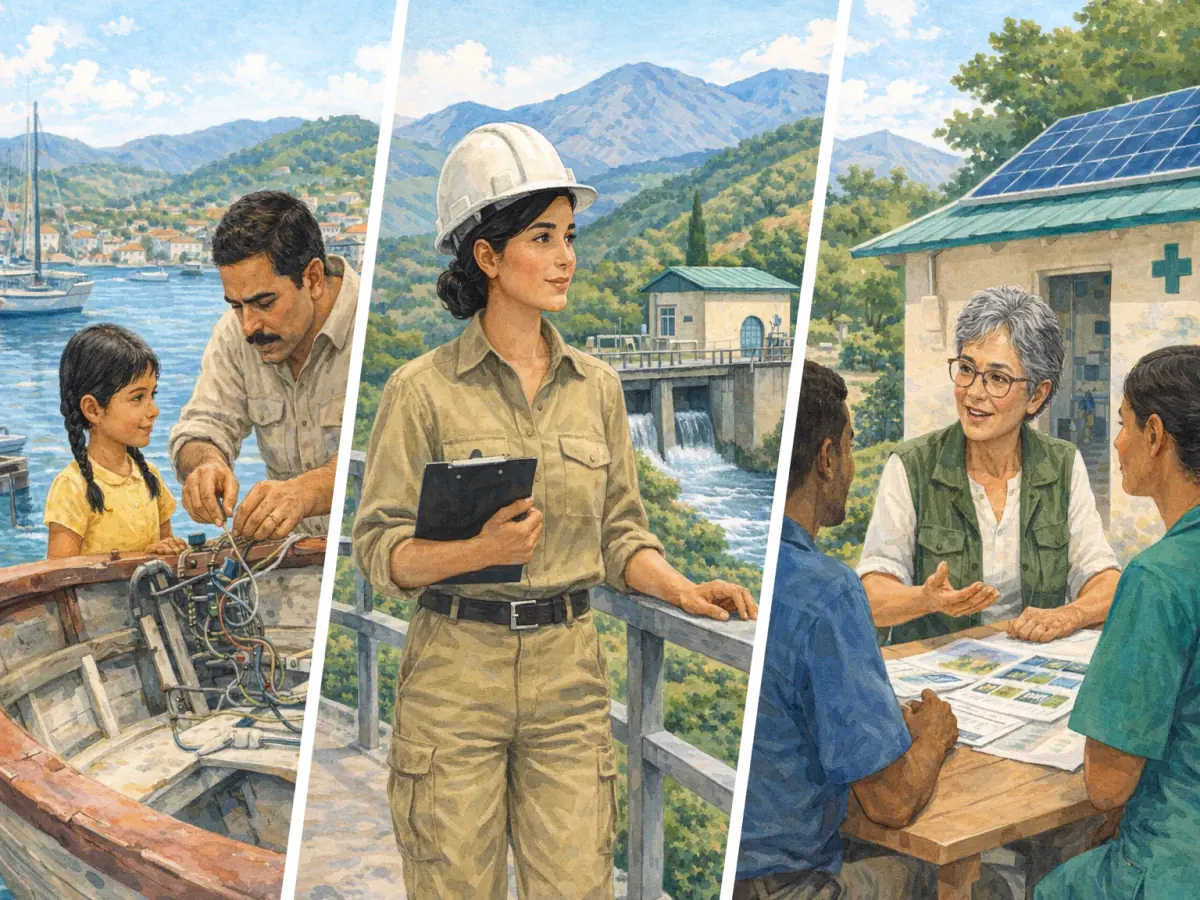
An engineer working with boat equipment, supervising a rural power project, and advising a solar clinic team.

Przewodnik na poziomie B1 (niższy średnio zaawansowany, A2–B1) po angielskiej biografii na 140–170 słów o kimś, kto żyje dziś: zwroty o wydarzeniach z życia, past simple dla wydarzeń z datą, present perfect z for i since oraz dwa punkty zwrotne.

Dobra krótka biografia nie wylicza wszystkich dat. Mówi, kim ta osoba jest dziś, dodaje trochę o wczesnych latach, opowiada o dwóch punktach zwrotnych i kończy się tym, co trwa do dziś. Wydarzenia z datą wymagają past simple: “She opened her first studio in 1998.” To, co nadal jest prawdą, wymaga present perfect z for albo since: “She has lived in Porto since 2012.” Tekst jest dla dorosłych na poziomie B1 (niższym średnio zaawansowanym, A2–B1); wystarczy 10 minut dziennie.

Dla kogo jest ten artykuł?

  • Dorośli na poziomie niższym średnio zaawansowanym, którzy umieją opowiadać w czasie przeszłym, ale zacinają się na “She has lived there since…”.
  • Każdy, kto chce napisać o mamie, dziadku, mentorze albo koledze z pracy: historia rodziny, kartka na emeryturę, sylwetka do biuletynu klubu.
  • Osoby przygotowujące się do zadania pisemnego lub ustnego o kimś, kogo podziwiają.
  • Za wcześnie: jeśli wciąż mylisz “I did” i “I’ve done”, zacznij od artykułu na poziomie B1 o niedawnym doświadczeniu i jego skutkach dziś.
  • Za łatwo: jeśli bez notatek łączysz wydarzenia z datą z tym, co ktoś robi dziś, przejdź do porównania lat szkolnych z dorosłym życiem.

Otwórz przykładowe strony

Otwórz przykładowe strony

Karty ze słowami

be born · verb phrase

begin life; normally use the passive was/were born

My aunt was born in Ankara in 1958.

go to primary school · verb phrase

attend the first stage of formal schooling

She went to primary school near her family’s bakery.

go to secondary school · verb phrase

attend the school stage after primary education

At eleven, she went to secondary school across the city.

leave school · verb phrase

finish or stop attending school

She left school at eighteen and began paid training.

go to university · verb phrase

study for a higher-education qualification

She went to university in the evenings while working.

get a job · verb phrase

obtain paid employment

After her course, she got a job in a local laboratory.

Rozmowa

maya When was your aunt Salma born?

owen She was born in Izmir in 1957 and left school at seventeen.

maya What did she do next?

owen She got a job repairing radios, then opened her own workshop in 1989.

maya Is she retired now?

owen She retired from full-time work in 2022, but she has mentored apprentices for twelve years and still runs a free class every month.

maya Has she always lived in Izmir?

owen No. She moved to Berlin in 1996 and has lived there since then.

Konstrukcja zdania

What does Salma still do?

She mentors apprentices and runs a free class every month.

Finished dates use past simple; continuing work and accumulated experience use present perfect.

  • was born
  • opened in 1998
  • has trained
  • has lived since

Więcej ćwiczeń

Finished life or life until now?

An engineer working with boat equipment, supervising a rural power project, and advising a solar clinic team.
past simple + finished time

use past simple with a finished date, age, period, or life

Lina opened her first studio in 1998.

present perfect + life until now

use present perfect for experience in an unfinished life when no finished time is stated

She has designed more than forty public spaces.

for / since + continuing state

use present perfect when the state began before now and continues

She has lived in Porto since 2012.

When…? → past simple

ask for a finished time with did or was/were

When did she win her first award?

deceased person → past simple

treat the person’s life and achievements as a finished period

Her grandfather wrote six books and died in 2004.

present result

use present perfect when a past action matters to the person’s current life

She has trained hundreds of apprentices, and many now run their own studios.

The engineer who kept the lights on

An engineer working with boat equipment, supervising a rural power project, and advising a solar clinic team.

THE ENGINEER WHO KEPT THE LIGHTS ON

Noura Haddad was born in a coastal town in 1954. Her father repaired fishing boats, and as a child she often watched him solve electrical problems with very simple tools. She left secondary school at eighteen and got a job in the office of a small power company.

The technical team did not include women then, but Noura studied electrical engineering at evening college for six years. In 1981, she became the company’s first female site engineer. She later led a project that brought reliable electricity to five remote villages. The work was difficult: materials arrived by boat, winter storms stopped construction, and each village needed a different plan.

Noura married Karim in 1984, and they had one daughter. The family moved to the capital in 1992 when Noura began training new engineers. She retired from full-time work in 2017, but retirement did not end her public work.

For the last nine years, she has advised a charity that installs small solar systems in rural clinics. She has also spoken at schools since 2019. “Young people need to see that technical work belongs to them,” she says. Noura has received several professional awards, but she keeps one object above her desk: the first light switch her father taught her to repair. It connects her finished career with the work she still does today.

Write a biography of a living person

An engineer working with boat equipment, supervising a rural power project, and advising a solar clinic team.

MARTA SILVA: A LIFE IN COMMUNITY RADIO

Marta Silva was born in Porto in 1962. She loved music and conversation, but she left school at sixteen to help in her family’s shop. In 1981, she joined a local radio station as an office assistant. Two years later, she presented her first evening programme.

Marta married Rui in 1987, and they had two children. She continued working and became the station’s programme director in 2001. During her career, she trained many young presenters and started a weekly programme for new local musicians.

She retired from full-time radio in 2023, but she has not stopped broadcasting. She has produced a monthly interview podcast for three years and has volunteered at a media club since last autumn. Marta now lives near the sea. She says her proudest achievement is not an award: it is hearing confident presenters whom she helped at the beginning of their careers.

How does a short biography become more than a list of dates?

It selects turning points, shows why they mattered, uses dates only where useful, and ends by connecting past experience to the person’s life now.

The model has a clear professional thread and closes with the subject’s own measure of success.

  • was born
  • left school
  • in 2001
  • has…for
  • has…since
  • now
Poznaj ten rozdział
Jak chcesz się uczyć?
Masz już konto?

Darmowe konto otwiera na stałe jeden rozdział.

Czego potrzebuje krótka biografia

Lista dat to nie historia życia. Wybierz, kim ta osoba jest dziś, trochę o wczesnych latach, dwa punkty zwrotne i to, co trwa do dziś. Fakty sprawdź najpierw z tą osobą albo z jej rodziną. Przydatne schematy:

  • “[Name] is a … who …” – kim jest dziś
  • “She was born in … in …” – gdzie i kiedy się urodziła
  • “In …, she …, so …” – punkt zwrotny i jego skutek
  • “Since then, she has …” – co trwa od tamtej pory
  • “Today, she still …” – co nadal robi

Wydarzenia z życia: od narodzin do emerytury

Te zwroty idą w kolejności życia. Gdy chodzi o naukę, school i university występują bez “the”: “go to university”, “leave school”. Polskie “urodziła się” ma formę zwrotną, a po angielsku zawsze mówimy was/were born.

  • be born (urodzić się): “My aunt was born in Ankara in 1958.”
  • leave school (skończyć szkołę albo ją rzucić): “She left school at eighteen and began paid training.”
  • get a job (dostać pracę): “After her course, she got a job in a local laboratory.”
  • marry someone albo get married to someone (wziąć ślub): “She married Deniz in 1984.” Polskie “ożenił się z” podsuwa “married with”, ale tak się nie mówi.
  • retire (przejść na emeryturę): “She retired from the laboratory at sixty-five.”

Past simple dla zakończonych wydarzeń z datą

Każdy zakończony czas (rok, wiek, “after that”) wymaga past simple, podobnie jak pytania z When…?.

  • Rok: “She opened her first studio in 1998.”
  • Pytanie: “When did she move to Berlin?”
  • Ktoś, kto już nie żyje: past simple od początku do końca: “Her grandfather wrote six books and died in 2004.”

Present perfect z for i since: to, co trwa

Dla sytuacji, która zaczęła się w przeszłości i nadal jest prawdą, użyj have/has + past participle: for + czas trwania, since + punkt początkowy. Polskie “od” obejmuje oba znaczenia: “od 1996 roku” to since, a “od dwunastu lat” to for. Bez zakończonego czasu present perfect opisuje też doświadczenie do dziś.

  • since: “She has lived in Porto since 2012.”
  • for: “She has worked from home for about twenty years.”
  • Doświadczenie do dziś: “She has trained hundreds of apprentices, and many now run their own studios.”
  • Zwyczaj teraz, ze still: “She still teaches one evening a week.”

Posłuchaj: historia życia ciotki

Kobieta pyta kolegę z pracy o jego ciotkę Salmę, która kiedyś naprawiała radia. Wsłuchaj się w wydarzenia z datą (was born, retired, moved) i w to, co trwa (has mentored, has lived).

Maya When was your aunt Salma born?

Owen She was born in Izmir in 1957 and left school at seventeen.

Maya Is she retired now?

Owen She retired from full-time work in 2022, but she has mentored apprentices for twelve years and still runs a free class every month.

Maya Has she always lived in Izmir?

Owen No. She moved to Berlin in 1996 and has lived there since then.

Poznaj ten rozdział po swojemu

Napisz biografię na 140–170 słów

Wybierz żyjącą osobę, której dane możesz sprawdzić:

  • Kim jest dziś: “Teresa Lopes is a retired nurse who now teaches first aid.”
  • Wczesne lata: “She was born in Lisbon in 1955 and left school at sixteen.”
  • Punkt zwrotny 1 i dlaczego był ważny: “In 1975, she got a job in a hospital kitchen, where nurses encouraged her to train.”
  • Punkt zwrotny 2: “In 1990, she moved to Canada and had to retake her nursing exams in English.”
  • Co trwa: “She retired in 2020, but she has run a monthly first-aid class since then.”
  • Jej własne zdanie: “She says her best reward is meeting former students who now work in hospitals.”

Częste błędy

Każdy łatwo poprawić:

  • “She born in 1957.” Brakuje was: “She was born in 1957.”
  • “She has opened her workshop in 1989.” “In 1989” to zakończony okres, więc wymaga past simple: “She opened her workshop in 1989.”
  • “She lives in Berlin since 1996.” To trwa do dziś, więc: “She has lived in Berlin since 1996.”
  • “since twelve years” Czas trwania to for: “for twelve years”
  • “She married with Deniz.” Powiedz “She married Deniz.”
  • Koniec na dacie: dodaj zdanie o teraźniejszości.

Plan ćwiczeń: 10 minut dziennie

Wybierz starszego krewnego albo znajomego.

  • 2 minuty: powtarzaj każde zdanie rozmowy. “Born” ma długie /ɔː/, a “work” ma /ɜː/.
  • 3 minuty: zapytaj tę osobę: “When were you born?” “When did you …?” “How long have you …?” “What do you still do?”
  • 3 minuty: napisz 140–170 słów w kolejności podanej wyżej.
  • 2 minuty: sprawdź każdy czasownik, a potem porozmawiaj: czy punkt zwrotny to wielkie wydarzenie, czy mała decyzja?

Co dalej

Następnie opisz przedmiot, używając strony biernej i sprawdzonych faktów. Potem porównaj swoje lata szkolne z dzisiejszym życiem zawodowym.

Najczęstsze pytania

Jak napisać po angielsku krótką biografię?

Zacznij od tego, kim ta osoba jest dziś, dodaj trochę o wczesnych latach, opowiedz o dwóch punktach zwrotnych i zakończ tym, co trwa do dziś.

Past simple czy present perfect w biografii?

Wydarzenia z datą wymagają past simple: “She moved to Berlin in 1996.” To, co trwa, wymaga present perfect: “She has lived there since then.” Jeśli ta osoba już nie żyje, używaj past simple.

Czym się różni for od since?

For podaje czas trwania (for twelve years), a since punkt początkowy (since 1996). For pasuje też do zakończonego okresu: “He worked there for five years, then left.”

Poznaj ten rozdział
Jak chcesz się uczyć?
Masz już konto?

Darmowe konto otwiera na stałe jeden rozdział.

Co dalej?

Ćwicz dalej z Flai

Flai to aplikacja Flalingo do ćwiczenia mówienia z AI. Oferuje rozmowy głosowe, korekty i raporty z lekcji, które pomagają ukierunkować naukę.

Nauka z lektorem na żywo

Na lekcjach Flalingo ćwiczysz takie rozdziały jeden na jeden z lektorem na żywo.