

There is no parent who does not want their child to one day speak English like a native — fluently, without an accent, and with confidence. So what is the single most decisive factor? The answer from a landmark study of more than half a million people comes down to one sentence: start learning English before the age of 17.
670,000 people: the largest language-learning study in history
Researchers from Harvard and MIT analyzed data from 669,498 people who took an English grammar test online. It is the largest study ever conducted in the field of language learning.
ages 10–12
the harder it gets
A surprising finding: English-learning capacity stays strong until 17, then gradually declines
The capacity to learn a language stays high throughout childhood and adolescence. Up to age 17, the brain is highly receptive to learning a new language. After 17, learning does not become impossible; it simply requires more time and effort.
So 17 is not a "wall." But the earlier you start, the easier English is to learn. While learning remains possible as we get older, the process becomes progressively harder.
"Reaching native-level proficiency in English depends on starting to learn it at a young age."The study’s clearest message to parents
Children who start learning English before age 12 have a very high chance of speaking it without an accent, like a native. After that, this chance drops quickly.
An expert’s opinion
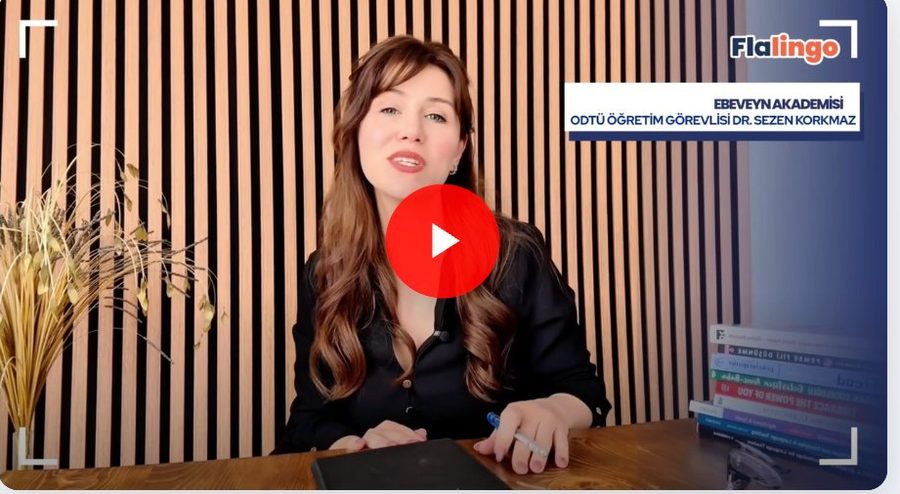
So what do these scientific findings mean for parents? Sezen Korkmaz, lecturer at METU (Middle East Technical University), explains the importance of early English education for children and what parents should pay attention to.

It is not about panic — it is about starting at the right time
The lesson from this study is not "if you are late, it is all over." Quite the opposite: it is valuable to start at any age. But science says one thing clearly — the earlier, the easier. A small step taken today shortens the years and effort your child would otherwise spend later.
Knowing English is not enough — being able to speak it is what matters
Many children take English lessons for years. Yet they still struggle to speak. The core reason is simple: the child does not use English enough.
Books, tests and memorization alone are not enough to learn English. A child needs to regularly hear, speak, make mistakes, be corrected, and try again.
This is where one-on-one lessons make a big difference. In a one-on-one lesson the child does not wait, does not hide, and does not get lost in a crowd. The teacher moves at the child’s exact level, pace and needs.
With Flalingo Kids, your child starts English at the right time
Flalingo Kids offers one-on-one online English lessons for children under 18. The child’s age, level, goals and learning style are all taken into account. Lessons are matched with a teacher suited to the child’s level, so the child does not just listen to English — they actively use it.
At Flalingo Kids the goal is not just to make children memorize words. The goal is for the child to reach a level where they understand, speak and use English with confidence.
The child communicates one-on-one with the teacher during the lesson. They answer questions, build sentences, make mistakes, get corrected and try again. This process builds the child’s confidence to speak.
- ✓One-on-one online lessons — the child never waits their turn in class
- ✓Specialists in teaching children, instructors selected through interviews
- ✓Age- and level-specific curriculum (ages 3-17)
- ✓Flexible hours — from home, after school or on weekends
- ✓Parent panel to track your child’s progress step by step
How does the Flalingo Kids system work?
The Smart Matching algorithm selects and matches the best 32 teachers suited to your child’s learning style and goals from among over 2,500 Kids-certified teachers.
Your child uses English actively, not passively, in one-on-one live online lessons with their matched teacher.
An AI technology called Flai prepares personalized activities and games to reinforce what your child learned in the lesson.
Every week you receive a parent report covering your child’s progress that week, including video clips from their lessons.
What do our parents say?
"My son now speaks in lessons without hesitation. The one-on-one format made a huge difference for him — he does not get bored."
"He was home all summer, it would have gone to waste. With this program his pronunciation improved incredibly, and he stood out at school in September."
The time your child learns most easily is now. Don’t waste the summer.
The science is clear: the earlier you start, the easier it becomes for your child to speak English like a native. Summer is the best time of year for that first step before it gets too late.
- ✓One-on-one, child-focused online lessons
- ✓Separate age groups for ages 3-17
- ✓Limited spots — reserve before the groups fill up